
Loading...
Serving Port Orange, FL and surrounding areas. (386) 284-1782
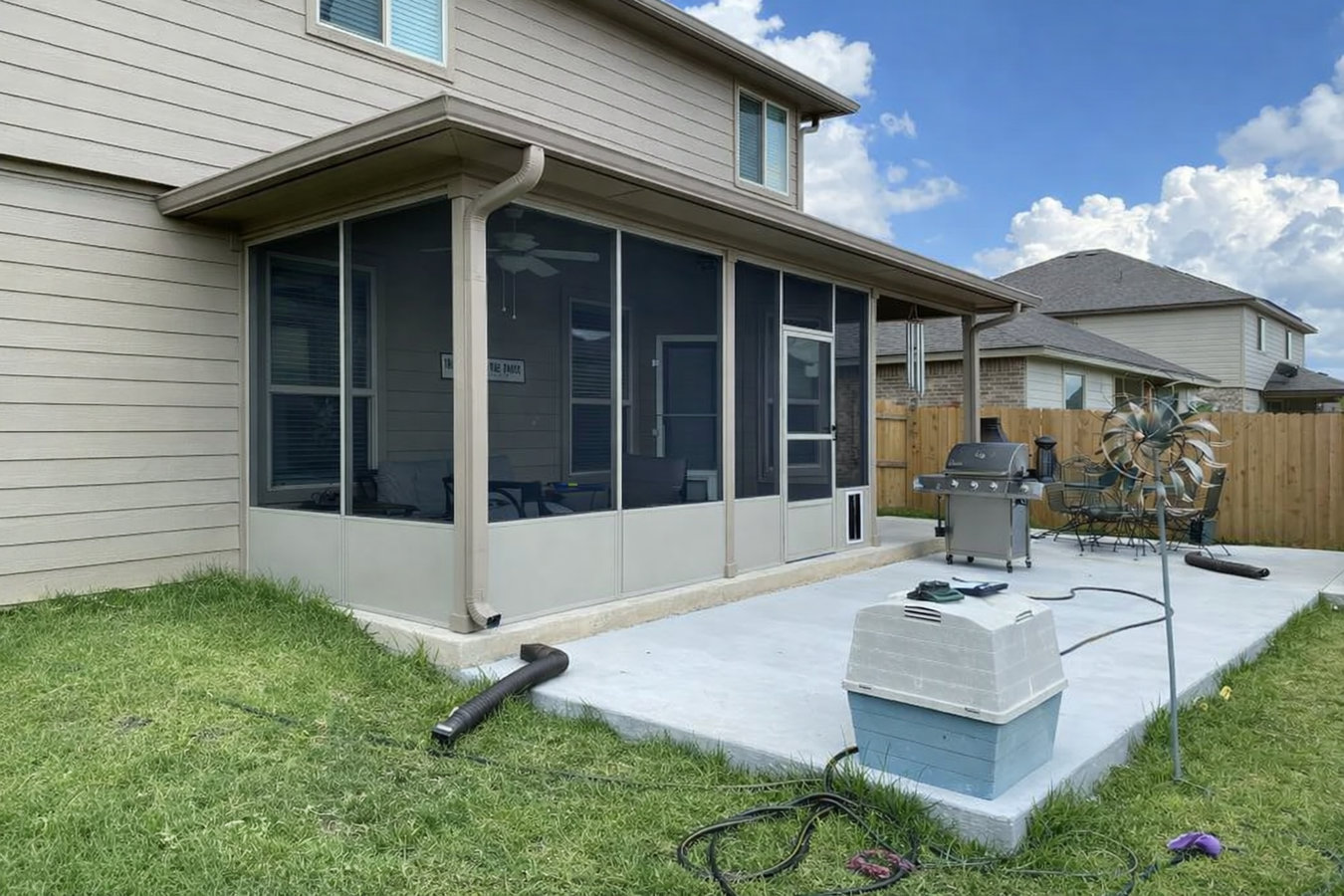
Mosquitoes, afternoon rain, and relentless Florida sun are keeping you off your own patio. We install permitted screen rooms in Port Orange that give you back those evenings - bug-free, dry, and comfortable from January through December.
Mosquitoes, afternoon rain, and relentless Florida sun are keeping you off your own patio. We install permitted screen rooms in Port Orange that give you back those evenings - bug-free, dry, and comfortable from January through December.
Screen room installation in Port Orange means building a fully enclosed, screened outdoor living space on your existing patio slab or a new concrete pad, with most installations taking two to five days of active work after permit approval - which typically adds one to three weeks at the front end.
A screen room gives you the feel of being outside - fresh air, natural light, views of your yard - without the mosquitoes, no-see-ums, and sudden afternoon downpours that define Port Orange evenings for much of the year. The frame is powder-coated aluminum anchored to your slab, with screen panels stretched and secured into the frame and a solid roof section overhead. It is one of the most practical outdoor improvements you can make in this climate because you can use the space comfortably for most of the year without any heating or cooling at all.
Homeowners who want a fully enclosed, climate-controlled room rather than an open-air space should look at our patio enclosures page, which covers solid-panel options that work year-round regardless of the heat.
If you step outside after 5 p.m. and immediately retreat because of mosquitoes or no-see-ums, your outdoor space is not really usable. Port Orange sits near the Halifax River and several retention ponds, and mosquito pressure here is persistent from spring through fall. A screen room gives you back those evening hours without bug spray or citronella candles.
Florida's summer storm pattern is predictable - clear mornings, building clouds by midday, and heavy rain by mid-afternoon. If you constantly abandon cookouts or move furniture inside because of sudden downpours, a screen room with a solid roof panel solves that entirely. You stay dry, your furniture stays dry, and the rain becomes background noise.
Port Orange's combination of intense UV exposure and high humidity is hard on outdoor furniture, cushions, and grills. If you are replacing cushions every year or noticing rust on metal furniture within a season or two, your patio is taking more sun and moisture damage than it should. A screen room reduces direct UV exposure and keeps rain off your belongings, extending the life of everything you keep out there.
Many Port Orange homes have a concrete patio slab that sits mostly empty because it is too hot, too buggy, or too exposed to be comfortable. If you walk past that slab every day and think about what it could be, that is a clear sign the space is ready to be converted. A screen room turns an underused slab into a room you will actually spend time in.
We handle everything from the initial slab assessment through permit submission, framing, screen installation, and the final county inspection walkthrough. The quality of the materials matters more here than in most parts of the country - Port Orange gets over 50 inches of rain a year, intense UV exposure, and storm-season wind gusts that test any outdoor structure. We use powder-coated aluminum framing that resists corrosion and screen materials that hold up to the local climate rather than degrading within a season or two. For homeowners who want something that goes beyond an open-air screen room, our patio-to-sunroom conversion service covers fully enclosed options with glass panels and climate control.
Screen material choice is something we walk every homeowner through before committing to a design. Solar screen blocks more heat and glare than standard fiberglass mesh, which makes a real difference on a west-facing patio that gets full afternoon sun. Heavier pet-resistant screen is worth considering if you have dogs or cats that like to push against the panels. The Florida Solar Energy Center publishes guidance on how different screen materials affect indoor temperature and comfort, which is useful context if you want to dig into the details before deciding. Our patio enclosures service is the natural upgrade path when clients want to add solid panels or glass to their screen room at a later date.
Best for homes that already have a concrete patio pad in good condition - the most common and cost-effective starting point in Port Orange.
Best for homes with no existing patio slab, or where the current slab is too cracked or thin to anchor a screen room frame properly.
Best for homeowners who already have a screen room but the screen panels are torn, sagging, or the frame has been damaged by storms or age.
Best for homes with non-standard patio layouts - L-shapes, curved pool decks, or spaces that standard prefab kits cannot accommodate.
Port Orange averages more than 230 sunny days a year and summer temperatures that regularly climb into the low 90s with high humidity. The city sits near the Halifax River and several retention ponds, which means mosquito pressure is genuinely persistent from spring through fall - not just an occasional nuisance. Screen rooms are the practical answer that most Port Orange homeowners land on because they work with the outdoor feel people actually want from Florida living while solving the specific problems that make open patios uncomfortable. The housing stock here also helps explain why demand is so consistent - many homes were built in the 1970s through 1990s with concrete patio slabs that are already in place and well-suited as a base for a new screen enclosure. Homeowners in Ormond Beach deal with the same conditions and we install screen rooms throughout that area as well.
Florida has some of the strictest building standards in the country for structures that have to withstand hurricane-force winds, and Volusia County falls within a wind zone that requires screen room framing and anchoring to meet specific resistance levels. That is not just a legal formality - it is the difference between a screen room that stays standing through a serious storm and one that becomes debris. The county inspection process at the end of every permitted job confirms those standards were met, which protects both your investment and your home. Homeowners across Edgewater and the rest of Volusia County face the same wind requirements, and we are familiar with the permitting process across all of them.
Call or send a message and we will schedule a time to visit your home - usually within a few days. Most inquiries get a response within one business day. We are not going to rush you or pitch you on a call; we just need to see the space to give you an accurate estimate.
We look at your existing patio slab, measure the space, ask about your goals, and walk you through options for size, roof style, and screen material. We also check the slab condition upfront - if it needs repair, you will know before you commit, not after the crew arrives.
We submit the building permit application to Volusia County on your behalf. If your neighborhood has an HOA, you will submit a separate approval request to them at the same time. Plan for one to three weeks for county approval - no physical work starts until both are in hand.
The crew arrives with all materials and assembles the frame and screen panels - typically two to four days for a standard room. After installation, the county inspector visits to confirm the structure meets local wind-load standards. We coordinate that appointment and hand you the passed inspection record when it is done.
No pressure, no obligation - we will visit your home, check your slab, walk you through your options, and give you a written estimate you can take your time with.
(386) 284-1782We pull every permit and coordinate the county inspection ourselves. A contractor who suggests skipping the permit to save time is not saving you anything - unpermitted work can complicate your home sale and may need to be torn out or retroactively permitted at your expense. Every screen room we build is on record with Volusia County.
Port Orange sits in a coastal wind zone where screen room framing has to meet specific storm-resistance requirements. We use aluminum framing engineered to those standards - not the lightest-gauge parts that technically pass inspection on paper. The difference shows when a serious storm rolls through and your structure is still standing.
Cracked or uneven slabs are one of the most common surprises in Port Orange screen room projects, particularly in homes from the 1970s and 1980s. We check the slab condition at the estimate visit and tell you upfront if it needs work - so the number you agree to is the number you pay. The Volusia County Building Division confirms structural work meets local code before the project closes.
We have been working in Port Orange and across Volusia County since 2020. We know the neighborhoods - from the communities near Spruce Creek to the older streets along Dunlawton Avenue - and we know which HOAs have specific requirements and what the county permit office expects on a screen room application. That local knowledge shortens timelines and avoids the back-and-forth that slows down out-of-area contractors.
A screen room is one of the most straightforward outdoor improvements you can make in Port Orange - but only when it is built correctly, permitted properly, and sized for the space you actually have. Professional screen room installation covers all of that, and we handle every step so you can focus on using the finished room.
Take the next step from a screen room to a fully enclosed, climate-controlled living space.
Learn MoreSolid-panel enclosure options for homeowners who want more weather protection than a screen room provides.
Learn MoreContractor schedules fill up fast before summer - lock in your spot now and have your screen room ready before mosquito season hits Port Orange in full force.