Loading...
Serving Port Orange, FL and surrounding areas. (386) 284-1782
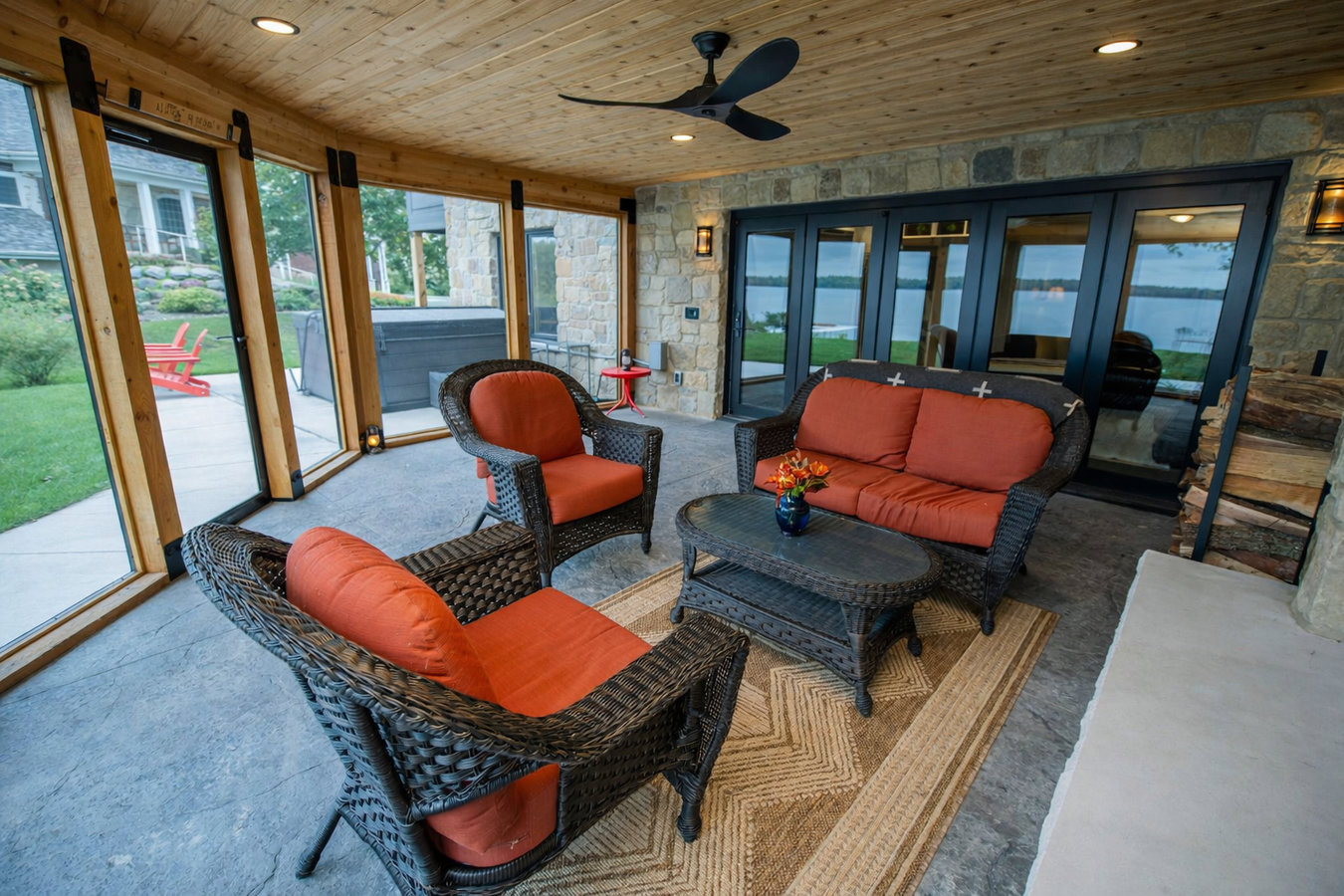
Port Orange Lanai Sunrooms & Patios builds custom sunrooms, patio enclosures, and screen rooms throughout Palm Coast, with specific experience on the concrete block construction that makes up most of this planned city's housing stock.
We have served Palm Coast homeowners since 2020 and understand the slab settlement, stucco, and soil conditions common to the original ITT-developed sections - so there are no surprises when our crew arrives.
Palm Coast's single-story CBS ranch homes are well suited to a custom sunroom addition - the slab foundation and rear yard setbacks on a typical ITT-era lot give us a clean, flexible attachment point. Explore our custom sunroom designs and tell us what you're picturing for your Palm Coast home.
Most Palm Coast homes were built with a covered or open lanai at the back, and many of those original slabs are still in serviceable condition. Enclosing that existing slab with aluminum framing and screen panels converts it into a usable living space at a fraction of the cost of building from scratch.
Palm Coast's wooded residential sections and canal-adjacent neighborhoods bring mosquitoes and no-see-ums throughout the warmer months. A screened enclosure around a back patio or lanai makes outdoor meals and evenings comfortable from March through November.
Palm Coast gets occasional cold snaps in winter, and an all season room with insulated panels and a ductless mini-split lets you use the space year-round. Homeowners near the canal system often find an enclosed, climate-controlled room a better long-term investment than an open screened enclosure in a high-moisture environment.
With Palm Coast's high homeownership rate and most houses sitting on modest single-family lots, a sunroom addition is one of the most effective ways to add livable square footage without a full interior renovation. The single-story footprint common to ITT-era homes makes rear additions structurally straightforward.
Canal-adjacent homes in Palm Coast deal with higher ambient moisture than properties further from the water. Enclosing a rear patio with solid panels rather than screen protects outdoor furniture and flooring from the dampness and keeps the space comfortable even during summer afternoon storms.
Palm Coast was built almost entirely by ITT Community Development Corporation starting in the early 1970s, which means the city's housing stock is remarkably uniform in age and construction type. The majority of homes are single-story concrete block structures finished in stucco, built on slab foundations, and now between 30 and 55 years old. At that age, stucco develops hairline cracks that allow moisture to work behind the surface, and slab foundations shift as the sandy Flagler County soil beneath them dries and compresses over decades. A contractor adding or repairing a sunroom enclosure needs to assess the condition of that stucco and slab before attaching anything new - otherwise a fresh enclosure attached to a compromised wall or settling slab will develop problems within a few years.
The city's extensive canal network adds a second layer of complexity for canal-adjacent properties. Homes that back up to one of Palm Coast's freshwater canals sit in higher-moisture soil and may have rear yard grades that direct water toward the house rather than away from it. Enclosures added to these properties need proper drainage planning and, where required, a review under Palm Coast's stormwater and canal maintenance guidelines. We account for those conditions on every canal-side estimate in the city.
Our crew works throughout Palm Coast regularly, and we understand the local conditions that affect sunroom contractor work here. We pull permits through the City of Palm Coast Building Division and are familiar with the canal-setback and stormwater questions that come up on rear-yard enclosure projects across the city's residential sections.
Palm Coast spreads across a wide area of Flagler County, with the main residential sections organized off Palm Coast Parkway and Belle Terre Parkway. Most of the older ITT-era neighborhoods sit west of US-1, while newer gated communities like Grand Haven occupy land closer to the Intracoastal Waterway. Washington Oaks Gardens State Park on the southern edge of the service area is a landmark many of our customers near the south sections mention - homes in that part of Palm Coast tend to be on slightly larger, more wooded lots than the original sections to the north.
We also serve nearby Flagler Beach to the east, where homes face direct Atlantic exposure and have their own set of salt-air material requirements, and Ormond Beach to the south - so our crew is already familiar with all of Flagler and northern Volusia County.
Call us or use the estimate form and we respond within one business day. We'll ask about your Palm Coast home's location, whether it backs up to a canal, and what type of enclosure you have in mind.
We visit your Palm Coast home, check the slab, stucco, and drainage conditions, and give you a written estimate with no obligation. We flag any slab settlement or stucco issues we see that should be addressed before enclosure work begins - no surprises on install day.
After you approve the estimate, we file the permit with the City of Palm Coast Building Division and order your materials. Permit review typically takes two to four weeks - canal-side projects may require a short additional stormwater review during that window.
Most Palm Coast builds complete in two to four weeks of active construction. We schedule and manage the final building inspection with the city and walk through every detail with you before we consider the job finished.
We serve all Palm Coast sections - from the original ITT neighborhoods to newer communities near the Intracoastal. Fill out the form below or call us for a free estimate. We respond within one business day.
(386) 284-1782Palm Coast is Flagler County's largest city, incorporated in 1999 but built almost entirely by ITT Community Development Corporation beginning in the early 1970s. The city's residential sections are laid out in a series of named neighborhoods - most of them single-family, single-story, with concrete block homes on modest lots - organized around Palm Coast Parkway and Belle Terre Parkway. A defining physical feature is the network of freshwater canals that runs throughout the city, giving many rear yards direct canal frontage. That canal system, the mature trees on older lots, and the proximity to large natural areas give Palm Coast a wooded, quiet character that stands apart from most other fast-growing Florida cities of its size.
The city has been one of Florida's fastest-growing for much of the past two decades, but the bulk of the housing stock still dates to the original ITT development - meaning most homes are now old enough to need their first or second round of significant maintenance. Newer upscale communities have grown near the Intracoastal and along the coast, and Washington Oaks Gardens State Park sits just south of the city along the Matanzas River. We serve all of Palm Coast and cover nearby Flagler Beach to the east and Ormond Beach to the south.
Enjoy your sunroom year-round with climate-controlled four season designs.
Learn MoreAffordable three season rooms that bring the outdoors inside comfortably.
Learn MoreKeep bugs out and breezes in with a professionally installed screen room.
Learn MoreTurn your deck into a fully enclosed sunroom and reclaim the space.
Learn MoreGlass solarium installations that flood your home with natural light.
Learn MoreDurable patio covers that provide shade and shelter for outdoor living.
Learn MoreFrom the original ITT neighborhoods near Palm Coast Parkway to the canal-front homes and newer communities near the Intracoastal, we build sunrooms and enclosures that fit the way Palm Coast homes were built. Call for a free estimate.